A Reasoned Examination
Why I Do Not Believe
Christianity Is True
An evidence-based look at the claims of Christianity through the lenses of science, history, Jesus, morality, scripture, and philosophy.
Introduction
Setting the Ground Rules
Before we begin, we need to establish what we're actually arguing about and who carries the burden.
Ground Rules
Burden of Proof
Extraordinary claims require extraordinary evidence.
The Claim
Christianity makes positive claims about reality: a God exists, Jesus rose from the dead, prayers are answered, miracles occur. These are not neutral statements — they assert something extraordinary about the universe.
The Burden
Whoever makes a positive claim carries the burden of proof. Skepticism is not a counter-claim — it's the default position until sufficient evidence is presented. The lack of belief is not a belief in lack.
Ground Rules
Evidence That Matters
Christianity makes testable claims about the world. We'll examine six independent areas — each acts as a lens that reveals whether those claims hold up.
No Faith Required
These are all secular, evidence-based inquiries. No scripture, no dogma, no theological assumptions — just the same tools we use to evaluate any truth claim about the world.
Six Chances to Be Right
If Christianity is true, it should hold up in at least one of these areas — ideally all six. If it fails in every single one, that is not a coincidence. That's a pattern.
Ground Rules
Six Lines of Evidence
We'll evaluate Christianity on six independent lines of evidence. Each stands on its own; together they form a cumulative case.
🔬
Scientific
Evolution, geology, and genetics contradict a literal Genesis. Every line of evidence points to an ancient Earth and common descent.
📜
Historical
Archaeology fails to confirm the Bible's foundational stories: no Exodus, no conquest of Canaan, no Davidic empire.
✝️
Jesus
The resurrection lacks credible evidence; OT prophecies were retrofitted; Jesus's own predictions of his return went unfulfilled.
⚖️
Moral
Hell and original sin are morally indefensible. The Bible endorses slavery, genocide, and misogyny.
📖
Biblical
The Bible is riddled with contradictions, the canon was decided by men with agendas, and inerrancy is an indefensible position.
🧠
Philosophical
Faith is not a virtue, Pascal's Wager is a logical trap, the problem of evil remains unanswered, and divine hiddenness undermines claims of a personal God.
Part One
The Scientific Argument
Does science point toward or away from the Christian worldview?
Scientific · Overview
The God of the Gaps
Science has a history of closing gaps where God was once the only explanation. The scientific evidence against a literal Genesis is not a recent discovery — it is the culmination of centuries of inquiry.
The Pattern
Lightning was divine wrath — now physics. Disease was divine punishment — now germ theory. The origin of species was special creation — now evolution. The history of science is a history of God being pushed into smaller and smaller gaps. Lightning, weather, disease, the motions of planets, the diversity of life — every domain once attributed to divine action now has a natural explanation. The pattern is undeniable: what we once explained by invoking God, we now explain through natural processes.
The Challenge
This section examines Christianity’s specific claims about the natural world: that the Earth is young, that species were individually created, that a global flood reshaped the planet, that humans arose from a single pair. In each case, the scientific evidence tells a different story. The question is not whether Christianity can accommodate science — it can, through reinterpretation. The question is whether the evidence supports a literal reading of Genesis, and what that means for a faith built on that foundation.
Scientific · Cosmology
The Fine-Tuning Fallacy
"The universe appears designed. Therefore a designer exists."
The Claim
Physical constants (gravitational constant, cosmological constant, strong nuclear force, etc.) appear to be finely tuned to within extraordinarily narrow ranges. If any were even slightly different, life could not exist. This seems to suggest a fine-tuner.
The Counter
Three major problems: (1) The Anthropic Principle — we can only observe a universe that permits our existence. (2) The multiverse hypothesis — if there are countless universes with varying constants, ours being life-permitting is unremarkable. (3) Fine-tuning assumes life is the goal — why not fine-tuned for something else?
The Puddle Analogy: A puddle waking up thinking "What a wonderful hole — it fits me perfectly!" mistakes its shape for evidence the hole was designed for it. We observe a universe that permits our existence — that's not surprising, it's tautological.
Scientific · Geology
Age of the Earth: Why Not 6,000 Years?
A direct contradiction between scripture and every dating method.
The Claim
Adding up Genesis genealogies yields a specific age for the Earth. Archbishop James Ussher calculated 4004 BCE for creation (~6,000 years ago). The Septuagint gives a slightly older figure of ~10,000 years. Either way, the Bible places the Earth at thousands of years old — a specific, testable claim grounded in the plain reading of the text.
⛰️ Radiometric Dating
Uranium-lead dating of zircon crystals gives Earth at 4.4 billion years. Multiple independent methods (K-Ar, Rb-Sr, Sm-Nd, U-Pb) all agree.
🌌 Stellar Distance
Light from galaxies billions of light-years away reaches us. A 6,000-year-old universe would mean God created light in transit — a deceptive appearance of age.
🪨 Geological Column
Globally consistent rock layers with distinct fossils. Makes no sense in a 6,000-year timeframe — requires rejecting the entire edifice of modern geology.
Scientific · Evolution
Evolved, Not Created
Evolution is the cornerstone of modern biology — supported by multiple independent lines of evidence.
🦴 Fossil Record: Every Prediction Confirmed
Evolution makes testable predictions — every one confirmed. Tiktaalik (fish with wrist bones) found exactly where predicted. Feathered dinosaurs closed the bird-reptile gap. The complete whale series exists, from wolf-like land mammal to fully aquatic giant, each stage in the right strata. If creationism were true, none of these sequences should exist.
🧪 Caught in the Act
We watch evolution happen. Bacteria evolve antibiotic resistance in real time. Darwin’s finches change beak shape in droughts. Italian wall lizards evolved new gut structures in 36 years. Ring species like Ensatina salamanders show one species becoming two — observable, testable, repeatable science.
🩻 Bad Design: The Signature of Evolution
The recurrent laryngeal nerve takes a 4.5-meter detour around the giraffe’s aorta; in fish it’s direct, trapped as necks lengthened. Our eyes are wired backwards with a blind spot; the octopus eye got it right. The vas deferens loops over the ureter. An intelligent engineer wouldn’t design any of this. Evolution tinkering with existing structures would.
The bottom line: Evolution is one of the most thoroughly tested theories in science. It does not disprove God, but it makes a literal reading of Genesis impossible. No Adam and Eve, no original sin, no Fall, no special creation. Christian soteriology has no foundation. See Appendix for the full evidence.
Scientific · Evolution
Origin of Humankind: The Evidence for Common Descent
Did humans evolve from apes? The evidence says yes — overwhelmingly so, across fossils, genetics, and population biology.
The Fossil Record
The hominin sequence is one of the best-documented transitions in paleontology: Sahelanthropus (7 mya) → Australopithecus (“Lucy”) → Homo habilis (tools) → Homo erectus (fire) → Neanderthals → Homo sapiens. The lineage is gradual and precisely dated. No gaps, no missing links.
Adam & Eve: The Genetic Impossibility
Population genetics shows humanity never bottlenecked to two individuals. Minimum viable population is 10,000–40,000. Our genetic diversity is far too high for a single pair. Mitochondrial Eve and Y-chromosomal Adam lived tens of thousands of years apart. A literal Adam and Eve is genetically impossible.
Chromosome 2 Fusion
Great apes have 48 chromosomes; humans have 46. Human chromosome 2 resulted from two ancestral chromosomes fusing end-to-end, confirmed by two vestigial centromeres and telomere sequences in the middle. Every ape genome has the two separate chromosomes; only humans have the fused version.
Scientific · Evolution
The Genetic Evidence: We Are Apes
Our DNA confirms what the fossils suggest — we share a common ancestor with the great apes.
Shared Broken Genes
The GULO gene (vitamin C production) is broken identically in humans, chimps, gorillas, and orangutans by the same mutation. Over 200 processed pseudogenes are shared at identical genomic positions. These are genetic fossils — broken in the same way in the same places. An intelligent designer has no reason to copy non-functional DNA.
ERVs: Viral Fossils
Hundreds of endogenous retrovirus insertions are shared between humans and chimps at the exact same genomic coordinates. When a retrovirus infects a germ cell, its DNA becomes permanent. Shared insertions mean the infection happened in a common ancestor. The odds of independent insertion at the same spot are effectively zero.
98.8% Genetic Identity
Human and chimpanzee genomes are 98.8% identical. The similarity follows a nested hierarchy: we share more with chimps than gorillas, more with gorillas than orangutans. This is exactly what evolution predicts and is inexplicable under independent creation.
The bottom line: The genetic evidence alone places humans firmly within the great ape family. Combined with the fossil sequence, the case for common ancestry is as strong as any conclusion in science. A literal Adam and Eve contradicts all of it.
Scientific · Summary
What Science Actually Shows
Four Christian claims, four scientific findings — and what it means for theology.
✗ The Christian Prediction
- A young Earth created in six literal days
- All species individually created by God
- A global flood that reshaped the planet
- Humans from a single pair a few thousand years ago
✓ What Science Found
- A 4.5-billion-year-old Earth formed by natural processes
- All life descended from common ancestors via evolution
- No evidence of a global flood; geology shows gradual change
- Humanity never bottlenecked to two individuals
The Fall Unravels
No Adam means no original sin — and without original sin, the need for a savior disappears. Paul explicitly ties Christ’s redemption to Adam’s transgression (Romans 5:12-21). Without the Fall, there is nothing to be saved from. Christianity can accommodate evolution by reinterpreting Genesis allegorically, but the theological cost is steep: the core soteriological framework must be abandoned or redefined beyond recognition.
No Special Status
Humans share a common ancestor with every living thing. Death and extinction have been part of life for hundreds of millions of years — they cannot be the result of Adam’s sin. Special creation and humanity’s unique status must be abandoned. Evolution does not disprove God, but it makes a literal Genesis impossible. The image of God becomes hard to define when our lineage connects continuously to earlier hominins.
Part Two
The Historical Argument
Do biblical events hold up when tested against archaeology, geology, and historical evidence?
Historical · Overview
Testing the Bible as History
The Bible presents specific events as literal history. What happens when we check the evidence?
The Biblical Claims
The Old Testament describes a global flood that destroyed all life except Noah’s Ark, a mass Exodus of millions of Israelites from Egypt, and a military conquest of Canaan led by Joshua. These are not presented as allegory or metaphor — they are described as real events that happened to real people in specific places at specific times. If any of them can be shown to be historically false, the Bible’s credibility as a historical document is seriously compromised.
What Archaeology Can Tell Us
The ancient Near East is one of the most intensively excavated regions in the world. We have extensive records from Egypt, Assyria, and Babylon — inscriptions, annals, administrative documents, and royal propaganda. We can date pottery, trace settlement patterns, and read the records of the very civilizations the Bible describes. If the Exodus happened, Egypt would have recorded it. If the Conquest happened, the ruins would show it. If Noah’s Flood happened, the geology would prove it. This is not a matter of interpretation — it is a matter of evidence.
Historical · Archaeology
Noah's Flood: The Geological Impossibility
The Claim
According to Genesis, God flooded the entire Earth, covering even the highest mountains, killing every land animal and human not on Noah's Ark. The flood lasted 40 days and nights, and the waters covered the earth for over a year before receding. All modern humanity and land animals are descended from the eight people and the animals on that single boat. This is presented as literal, global history.
Geological Impossibility
- No geological evidence for a global flood in the last 6,000 years
- Stratigraphic layers show gradual deposition over millions of years, not a single catastrophic flood
- Ice cores from Greenland and Antarctica show annual layers going back 100,000+ years — uninterrupted
- If a global flood occurred, we'd expect a worldwide layer of flood sediment. No such layer exists.
Biological Impossibility
- 8 people could not feed, clean, and care for ~35,000+ animal species (let alone insects and marine life)
- Freshwater fish would die in saltwater; saltwater fish in freshwater
- Post-flood repopulation is genetically impossible from such a small founder population
- Kangaroos and koalas making it from Ararat to Australia without leaving fossils along the way stretches credulity
Historical · Archaeology
The Exodus: The Missing Evidence
The foundational story of Israel — with zero archaeological support.
The Biblical Account
The Book of Exodus describes 600,000 Israelite men (likely 2–3 million people total) living as slaves in Egypt, enduring ten plagues, then walking out of Egypt after the firstborn of every Egyptian family was killed. They crossed the Red Sea, wandered in the Sinai desert for 40 years, and received the Law at Mount Sinai. This was a civilization-altering event — a catastrophe for Egypt and a miracle for Israel.
What Archaeology Finds
- No Egyptian records of a slave population, plagues, or a mass departure. Egypt recorded everything — including far smaller events
- No evidence of 2 million people living in the Sinai for 40 years: no campsites, no graves, no pottery, no animal bones. The Sinai desert cannot support that many people
- No evidence of conquest in Canaan that matches the biblical timeline. Many cities Joshua supposedly conquered (like Jericho and Ai) were either unoccupied or already destroyed centuries earlier
- No demographic shift in Canaan that suggests an incoming population. The archaeological record shows continuous Canaanite habitation
The scholarly consensus: Mainstream archaeologists and biblical historians (Israel Finkelstein, William Dever, Richard Elliott Friedman, and most others) agree that the Exodus as described in the Bible did not happen. Some suggest a small group of Semitic slaves may have escaped Egypt and their story was later magnified into a national epic. But the mass Exodus of millions is not supported by any evidence.
Historical · Archaeology
The Conquest of Canaan: What the Archaeology Reveals
The walls of Jericho fell — but not when the Bible says.
The biblical claim: Joshua's army crosses the Jordan, destroys Jericho as its walls fall, and conquers Canaan city by city, wiping out entire populations as God commanded. A swift, total, divinely ordained conquest.
Excavated by Kathleen Kenyon. Destroyed around 1550 BCE — 300 years before the biblical date (~1200 BCE). By 1200 BCE it was a small, unfortified settlement or uninhabited.
The name means “the ruin” — fittingly, it was already a ruin when the Israelites supposedly conquered it. Abandoned centuries before.
Cities Joshua supposedly destroyed show no evidence of a coordinated campaign. Some were destroyed at different times, others not destroyed at all.
The consensus: Israelites did not invade Canaan — they emerged from within Canaanite society. The first “Israelite” settlements appear ~1200 BCE with material culture indistinguishable from Canaanites.
What this means: The Israelites did not invade Canaan from outside — they were Canaanites who gradually differentiated themselves. The conquest narrative was written centuries later as a theological origin myth, not a historical record.
Historical · Summary
What the Evidence Shows
The pattern is consistent and devastating.
🌊 Noah’s Flood
No geological evidence for a global flood in the last 6,000 years. Ice cores show 100,000+ years of uninterrupted annual layers. The story derives from older Mesopotamian flood myths.
🇪🇬 The Exodus
No Egyptian records of a slave population, plagues, or mass departure. No archaeological evidence of 2 million people in the Sinai for 40 years. The scholarly consensus: the Exodus as described did not happen.
⚔️ The Conquest
Jericho was destroyed 300 years before the biblical date. Ai was already a ruin. The Israelites did not invade Canaan — they emerged from within Canaanite society.
The verdict: In every case where independent evidence exists to test the Bible’s historical claims, the evidence fails to support them. The most parsimonious explanation is that these stories were written centuries after the supposed events, as theological and political constructs — not as history. This does not make them worthless, but it means the Bible is not a reliable historical record.
Part Three
The Case of Jesus
What can history tell us about Jesus? And do the New Testament’s claims about him hold up?
Jesus · Overview
What Can We Know About Jesus?
Three questions: Is the resurrection credible? Were the prophecies really predictions? Did Jesus’s own promises come true?
The Central Claim
Christianity stands or falls on the resurrection. If Jesus rose from the dead, Christianity is true. If he did not, it is false. Paul himself makes this clear: “If Christ has not been raised, your faith is futile” (1 Cor 15:17). This is the claim we must examine most carefully — and by the standards of historical evidence, it requires extraordinary proof.
Prophecy and Prediction
Christians often point to Old Testament prophecies as evidence that Jesus was the messiah. But do those verses actually predict Jesus, or were they reinterpreted after the fact? And Jesus himself made specific predictions about his own return within his disciples’ lifetime — predictions that did not come true. This section examines all three questions.
Jesus · Central Claim
The Resurrection: Extraordinary Claim, Insufficient Evidence
The central claim of Christianity — and the hardest to verify historically.
The Claim
A man died, was dead for three days, and then rose from the dead — never to die again — resurrected to a glorified, immortal body. This is a miracle of the highest order, and it requires correspondingly high-quality evidence.
The Evidence Problem
- No contemporary non-Christian source mentions it
- The empty tomb story appears only in the Gospels, decades later
- Paul's account (1 Cor 15) mentions only visions, not an empty tomb
- The Gospel accounts contradict each other on who found the tomb, what they saw, and what happened next
- Natural explanations (hallucination, borrowed tomb, wrong tomb, legend formation) are more parsimonious than a violation of every known law of nature
Jesus · Prophecies
The Prophecy Problem
Christians claim dozens of Old Testament verses predict Jesus. But do they actually?
The New Testament authors used a technique called vaticinium ex eventu — reading earlier texts in light of later events. Verses that originally referred to contemporary figures (King Ahaz, the nation of Israel, the Psalmist’s own suffering) were reinterpreted as “prophecies” of Jesus. This was standard Jewish interpretive practice at the time, but it is not prediction in any meaningful sense.
The Seven Most-Cited Prophecies
| # | The Claim · Why It Fails |
|---|---|
| 1 | Isaiah 7:14 “virgin will conceive” — Hebrew word almah means “young woman,” not “virgin.” Referred to Isaiah’s own son, born during the Syro-Ephraimite war. |
| 2 | Micah 5:2 “Bethlehem” — refers to a coming ruler who would defend Israel against Assyria. Jesus was born in Bethlehem, but the prophecy was about a contemporary deliverer. |
| 3 | Hosea 11:1 “out of Egypt I called my son” — refers to the nation of Israel, not an individual. Matthew takes it out of context entirely. |
| 4 | Jeremiah 31:15 “Rachel weeping” — refers to the Babylonian exile, not a massacre by Herod. Matthew recontextualizes it to fit his narrative. |
| 5 | Isaiah 53 “Suffering Servant” — describes the nation of Israel or Isaiah himself, not an individual messiah. Jewish interpretation has never read it as messianic. |
| 6 | Psalm 22 “my God, my God” — a poetic psalm describing the Psalmist’s own suffering. The “pierced” detail is a mistranslation of “like a lion.” |
| 7 | Psalm 16:10 “not abandoned to the grave” — the Psalmist expresses confidence in God’s protection, not a prediction of resurrection. |
See Appendix for detailed analysis of each prophecy.
Jesus · Prophecy Summary
What the Prophecies Actually Show
The pattern is clear and consistent across all major “messianic prophecies.”
The Claim
- The Old Testament contains dozens of specific predictions about a coming messiah
- Jesus fulfilled every one of them
- This proves Jesus was the prophesied messiah
- Old Testament prophecy is evidence of divine inspiration
The Reality
- Verses are consistently taken out of their original context
- Original meanings refer to contemporary figures, events, or the nation of Israel
- “Fulfillment” is often vague, metaphorical, or simply incorrect
- Many prophecies cited by the NT are not predictive at all in their original setting
Jesus · Predictions
When Prophecy Fails
Jesus made specific, testable predictions about the future. They did not come true.
If a prophet makes a prediction and it does not come true, Deuteronomy 18:22 is clear: “That prophet has presumed to speak in my name… you need not be afraid of him.” Jesus made several predictions with clear timeframes. They are the most difficult passages in the New Testament for Christian apologists, and entire books have been written attempting to explain them away. Let’s examine what Jesus actually predicted and what actually happened.
Jesus · Failed Prediction #1
Return Within a Generation
The most explicit and most problematic prediction.
What Jesus Said
Matthew 16:28: “There are some standing here who will not taste death until they see the Son of Man coming in his kingdom.”
Matthew 24:30-34: “They will see the Son of Man coming on the clouds of heaven with power and great glory… Truly I tell you, this generation will not pass away until all these things take place.”
Mark 13:30: “This generation will not pass away until all these things take place.”
Mark 9:1: “Some who are standing here will not taste death before they see the kingdom of God come with power.”
Every single person of that generation died. The Son of Man did not return. “This generation” cannot be redefined to mean “the Jewish people” or “the generation that sees the signs” without violating the plain meaning of the text. Albert Schweitzer, Bart Ehrman, E.P. Sanders, and most critical scholars agree: Jesus expected the end within his own lifetime and was mistaken.
Jesus · Failed Prediction #2
The Twelve Apostles on Thrones
A specific promise to his closest followers.
What Jesus Said
Matthew 19:28: “Truly I tell you, at the renewal of all things, when the Son of Man sits on his glorious throne, you who have followed me will also sit on twelve thrones, judging the twelve tribes of Israel.”
None of the twelve apostles ever sat on a throne judging anyone. Most died in obscurity. Peter was crucified, James was executed, John died in exile, Judas committed suicide. The “renewal of all things” never occurred in their lifetimes. This is not a prediction that can be “spiritualized” — thrones and judgment are concrete images with a concrete meaning.
Jesus · Failed Prediction #3
The Mission Promise
“You will not finish going through the towns of Israel before the Son of Man comes.”
What Jesus Said
Matthew 10:23: “When they persecute you in one town, flee to the next. For truly I tell you, you will not finish going through the towns of Israel before the Son of Man comes.” Jesus is sending his disciples on a mission and telling them it will be interrupted by his return — the ultimate interruption. The timeframe is explicit: before they finish their circuit of Israelite towns.
The disciples finished going through Israel many times over. Paul traveled extensively throughout the region. The Son of Man did not come. Apologists argue that this was about the specific mission in Matthew 10 and that the “coming of the Son of Man” refers to Jesus’s resurrection or the destruction of Jerusalem. But the text says nothing about resurrection or 70 CE — it says the Son of Man will come before they finish their circuit.
Jesus · Failed Predictions Summary
If the Prophet Failed
If Jesus was wrong about his own return, why trust him on anything else?
Minimal Facts
- Jesus of Nazareth was a Jewish apocalyptic preacher
- He believed the end of the world was imminent
- He predicted his return within his disciples’ lifetime
- His followers adapted after the prediction failed
The Dilemma
- Jesus predicted his return within a generation — it did not happen
- He promised his apostles thrones — they did not receive them
- He guaranteed prayer works — mountains stay put
- The most important prediction failed. What remains?
Jesus · Summary
The Verdict on Jesus
Three independent lines of evidence — three consistent results.
✝️ The Resurrection
No contemporary corroboration. Four contradictory Gospel accounts written decades later by anonymous authors. Paul’s earlier account mentions only visions, not an empty tomb. Natural explanations are more parsimonious than a violation of every known law of nature.
📖 OT Prophecies
Every major “messianic prophecy” fails under scrutiny. Verses are taken out of context, mistranslated, or refer to contemporary figures and events. The NT authors used vaticinium ex eventu — reading earlier texts in light of later events.
⏳ Jesus’s Own Predictions
Jesus predicted his return within his disciples’ lifetime (“this generation will not pass away”). He promised the apostles thrones. He said the Son of Man would come before they finished their mission. None of it happened. Deuteronomy says a prophet whose words fail is not from God.
The verdict: The New Testament’s claims about Jesus fail on all three fronts. The resurrection lacks credible historical evidence, the prophecies are retrofitted rather than predictive, and Jesus’s own predictions demonstrably did not come true. The most parsimonious explanation: Jesus was an apocalyptic preacher who was wrong about the timing of the end, and his followers adapted his message after his death.
Part Four
The Moral Argument
Does Christian morality stand up to philosophical scrutiny? And does the Bible itself provide a sound moral foundation?
Moral · Overview
Does Christianity Provide a Sound Moral Foundation?
Two questions: Is the Bible’s moral teaching defensible? And are its core doctrines just?
What the Bible Commands
The Old Testament contains laws endorsing slavery, genocide, and capital punishment for offenses like working on the Sabbath. Women were treated as property. These are presented as God’s direct commands, not cultural concessions. If the Bible is a divine moral guide, its commands should be morally exemplary. But by modern standards, much of it is not.
What Christian Doctrine Requires
Beyond the specific commands, the core doctrines of Christianity raise deeper moral questions. Is it just to punish finite sins with infinite suffering? Is it fair to hold all humanity guilty for Adam’s transgression? Is a blood sacrifice a morally coherent way to achieve forgiveness? These are not theological puzzles — they are questions about whether the Christian system is fundamentally just.
Moral · Scripture
Biblical Morality: Slavery & Genocide
The Old Testament condones — and God commands — practices we now consider among the worst moral evils.
🔗 Slavery
The Bible does not condemn slavery — it regulates and endorses it. Key passages:
- Leviticus 25:44-46 — God tells Israel they may buy slaves from surrounding nations and pass them as inherited property to their children. These slaves are owned for life, unlike Hebrew servants who go free after six years.
- Exodus 21:20-21 — If a master beats a slave to death, he is punished only if the slave dies immediately. If the slave lingers for a day or two, the master is not punished because the slave is his property.
- Ephesians 6:5 — The New Testament tells slaves to obey their masters with fear and trembling, as they would Christ. Nowhere in either testament is slavery condemned as a moral evil.
⚔️ Genocide
God explicitly commands the wholesale destruction of entire peoples:
- Deuteronomy 20:16-18 — “In the cities of the nations the Lord your God is giving you as an inheritance, do not leave alive anything that breathes. Completely destroy them… so that they will not teach you to follow all the detestable things they do for their gods.”
- 1 Samuel 15:3 — God commands Saul to “attack the Amalekites and totally destroy everything that belongs to them. Do not spare them; put to death men and women, children and infants, cattle and sheep, camels and donkeys.” Saul is later rejected as king for sparing the Amalekite king and the best livestock.
- Joshua 6:21 — The army of Israel “devoted all in the city to destruction, both men and women, young and old, oxen, sheep, and donkeys, with the edge of the sword.” This is presented as obedience to divine command, not a regrettable act of war.
The apologetic response: “That was the Old Covenant; we’re under the New Covenant.” But this raises a serious problem: if God’s moral commands can change, then morality is not absolute — it is relative to whatever God commands at the time. And it means God once commanded slavery and genocide, which we now recognize as evil. Did God change his mind? Or did human moral understanding surpass what scripture presents as divine will?
Moral · Scripture
Biblical Morality: Misogyny & Capital Punishment
The Bible treats women as property and prescribes the death penalty for minor offences.
👩 Misogyny
Women are consistently treated as subordinate to men throughout scripture:
- Deuteronomy 22:28-29 — A man who rapes an unbetrothed virgin must pay her father 50 shekels and marry her. He may never divorce her. The victim is forced to marry her rapist. The crime is treated as a property violation against the father.
- 1 Timothy 2:11-14 — “A woman should learn in quietness and full submission. I do not permit a woman to teach or to assume authority over a man; she must be quiet. For Adam was formed first, then Eve. And Adam was not the one deceived; it was the woman who was deceived and became a sinner.”
- Numbers 31:17-18 — After conquering the Midianites, Moses orders the execution of all male children and non-virgin women; only virgin girls are spared — to be taken as spoils. This is presented as obedience to God.
- Elsewhere: Women could not inherit property (except under specific conditions), could not initiate divorce, and their testimony in court was not given the same weight as a man’s. A woman suspected of adultery was forced to drink bitter water (Numbers 5) — a trial by ordeal with no male equivalent.
🔞 Death Penalty for Minor Offences
The Old Testament prescribes capital punishment for a wide range of non-violent offences:
- Exodus 31:14-15 — Working on the Sabbath carries the death penalty. A man is executed in Numbers 15:32-36 for gathering sticks on the Sabbath.
- Leviticus 20:9 — Cursing your parents carries the death penalty.
- Leviticus 20:10 — Adultery carries the death penalty (for both parties).
- Leviticus 20:13 — Homosexual acts carry the death penalty.
- Leviticus 20:27 — Being a medium or spiritist carries the death penalty.
- Deuteronomy 21:18-21 — A stubborn and rebellious son can be stoned to death by the community.
- Exodus 22:18 — “Do not allow a sorceress to live.”
- Note: These laws are presented as God’s direct commands, not cultural concessions. They are woven into the same legal codes as the Ten Commandments.
The apologetic response: “These were cultural concessions to a primitive time.” But the text does not present them as concessions — they are framed as the direct, unchanging commands of a morally perfect God. If they were concessions, why does God not mark them as such? And if human morality has evolved beyond God’s commands, then human reason has surpassed divine revelation — a deeply problematic position for any Christian to hold.
Moral · Punishment
Hell: The Problem of Eternal Punishment
Finite sin, infinite punishment — is that justice?
The Traditional Doctrine
Mainstream Christianity has historically taught that those who die without accepting Jesus as savior will suffer eternal, conscious torment in hell. This is not annihilation — it is forever. The suffering never ends. And it applies not just to murderers and tyrants, but to good people who happened to be born into the wrong religion, or who honestly could not believe.
The Moral Problem
- Proportionality: Every criminal justice system in the world punishes crimes proportionally. A lifetime of sin — even a very bad one — cannot justify infinite suffering. No finite crime deserves infinite punishment. If a human judge sentenced someone to eternal torture for stealing bread, we'd call it monstrous. Why does God get a pass?
- Finite creatures, infinite debt: The theological defense is that sin against an infinite God incurs infinite debt. But this is an invented metric — it assumes the nature of the offended party determines the magnitude of the crime. The scale of punishment should fit the crime, not the perceived status of the victim.
- Knowledge problem: Billions of people — including children who die young, those in remote tribes, and sincere followers of other faiths — are condemned for not believing something they had no reasonable chance of believing. Is ignorance a sin worthy of eternal torment?
- Annihilation vs. torment: Some Christians reject eternal conscious torment in favor of annihilationism. This is more defensible but still problematic — it means God creates beings knowing they will be destroyed, which is hard to reconcile with a loving creator.
Moral · Justice
Original Sin: Born Guilty
The doctrine that we are all born sinful — and therefore deserve punishment — before we have done anything wrong.
The Doctrine
Augustine codified the doctrine of original sin: because Adam sinned, all of humanity inherits both a sinful nature and the guilt of that first sin. We are born already guilty in God's eyes, deserving of punishment before we've committed a single wrong act. This is why infant baptism was considered necessary in much of church history — unbaptized babies who died were thought to go to hell or to a separate place called limbo.
The Injustice
- Inherited guilt: In what moral system does guilt pass from parent to child? We do not hold children responsible for their parents' crimes. The very idea is repugnant to any sense of justice. Yet this is exactly what original sin claims: you are guilty of Adam's sin, and you deserve punishment for it, through no choice of your own.
- Inherited nature: Even the milder version — that we inherit a sinful nature rather than guilt — is troubling. It means God created beings with a built-in inclination to sin, then punishes them for acting on that inclination. It is like creating someone with an addiction and then condemning them for using.
- The escape clause: The solution, according to Christianity, is Jesus. But this means God required a blood sacrifice of himself to himself to fix a problem he created in the first place. If God can forgive sins freely — and he is said to be perfectly loving and merciful — why is a sacrifice necessary at all? Why not just forgive?
- Substitutionary atonement: The idea that an innocent person must be punished for the guilty is an ancient tribal concept (scapegoating), not a model of justice. In any civilized legal system, punishing an innocent person for the crimes of the guilty is called a miscarriage of justice.
Moral · Summary
The Moral Landscape
✓ For Christianity
- Provides a metaphysical foundation for morality
- Offers meaning, purpose, and hope
- Has inspired charitable institutions and social reforms
- Teaches forgiveness, humility, and love of neighbor
✗ Against
- Eternal punishment for finite sins is morally indefensible
- Much biblical morality (slavery, genocide, misogyny) is now rejected
- Hell and original sin — doctrines of inherited guilt and infinite punishment — are unjust by any reasonable standard
- Secular moral frameworks (utilitarianism, deontology, virtue ethics) provide robust foundations without God
The verdict: Christianity fails on both counts. Its specific moral commands (slavery, genocide, misogyny) are rejected by modern ethical standards, and its core doctrines (hell, original sin, substitutionary atonement) are morally problematic on their own terms. Secular ethical frameworks — grounded in empathy, reason, and human flourishing — provide a more consistent and defensible foundation for morality.
Part Five
The Bible Itself
Examining the Bible's own claims: inerrancy, canon, contradictions, and the problem of prophecy.
Bible · Overview
Is the Bible What It Claims to Be?
The Bible claims to be the inspired, inerrant word of God. Does the evidence support that claim?
The Claim
Protestant Christianity holds that the Bible is the inspired, inerrant Word of God — without error in its original manuscripts and authoritative for faith and practice. This is a strong claim, and it is testable. If the Bible contains internal contradictions, historical errors, or signs of human invention, then the claim of divine authorship is undermined.
The Test
We will examine three areas: (1) Textual transmission — do we even have the original text? (2) Canon formation — who decided which books belong, and on what basis? (3) Internal consistency — does the Bible contradict itself? The answers to these questions will tell us whether the Bible looks like a divinely inspired book or a very human one.
Bible · Textual Criticism
Inerrancy & Textual Transmission
The original autographs don't exist. What we have are copies of copies.
The Claim of Inerrancy
Many Christians believe the Bible is without error in its original manuscripts. But we don't have the originals. We have thousands of handwritten copies, all of which contain differences — scribal errors, additions, deletions, and theological corrections.
What Textual Criticism Reveals
- There are 400,000+ textual variants among NT manuscripts
- Most are minor, but some affect doctrine: the story of the woman caught in adultery (John 7:53–8:11) and the longer ending of Mark (Mark 16:9–20) are later additions, not original
- The Johannine Comma (1 John 5:7–8) — the only explicit Trinitarian verse — was added centuries later
- We reconstruct the "original" text through scholarly inference, but we can never be certain we have it exactly right
Bible · Canon
The Canon: Chosen by Men, Not God
Who decided which books belong in the Bible?
-
📜 The Old Testament Canon
Jesus and the NT authors used the Septuagint (Greek translation), which includes the Apocrypha/deuterocanonical books. Protestants later excluded these books. There was no "official" Jewish canon until the Council of Jamnia (~90 CE).
-
📖 The New Testament Canon
The 27-book NT canon was not finalized until the late 4th century (Council of Carthage, 397 CE). Many gospels were circulated before being excluded: Thomas, Peter, Shepherd of Hermas, Didache. The canon was decided by fallible bishops and councils.
-
🔍 Criteria for Inclusion
Books were included based on apostolic authorship, orthodoxy, and widespread usage — human criteria, not divine markers. Catholic, Orthodox, and Protestant traditions still disagree on the canon today.
Bible · Internal Consistency
Internal Contradictions
An inerrant book shouldn't contradict itself. Yet it does.
Historical Contradictions
- Who killed Goliath? David (1 Sam 17) or Elhanan (2 Sam 21:19)?
- Who incited David's census? God (2 Sam 24:1) or Satan (1 Chr 21:1)?
- How did Judas die? Hanged himself (Matt 27:5) or fell and burst open (Acts 1:18)?
- When was the Last Supper? Before or during Passover? (Synoptics vs John)
- What happened at the empty tomb? One angel? Two? Sitting? Standing? Inside? Outside?
Theological Contradictions
- Is salvation by faith alone (Eph 2:8-9) or faith + works (James 2:24)? Luther wanted to remove James.
- Does God repent/change his mind? Yes (Ex 32:14, Jon 3:10). No (Num 23:19, 1 Sam 15:29).
- Does God tempt people? Yes (Gen 22:1, 2 Sam 24:1). No (James 1:13).
- Is God a God of peace or does he create evil? (Isa 45:7 vs multiple "God is love" passages)
- Are we justified by faith alone or do we need to keep the law?
Bible · Summary
The Bible as a Human Book
✓ If Divinely Inspired
- We should expect internal consistency
- We should expect historical and scientific accuracy
- We should expect fulfilled prophecies
- We should expect moral clarity and progress
- We should expect a clear, universally recognized canon
✗ What We Actually Find
- Contradictions on basic historical facts
- Scientific claims that don't match modern understanding
- Unfulfilled prophecies explained away
- Morality that reflects ancient Near Eastern culture, not transcendent perfect goodness
- A canon that was debated and settled by human institutions
The verdict: The Bible fails every test of divine authorship. We do not have the original manuscripts — we have copies full of scribal errors and theological corrections. The canon was decided by human councils over centuries, with different traditions disagreeing on which books belong. The text contradicts itself on basic historical and theological points. When examined with the same tools we apply to any ancient text, the Bible looks exactly like what it is: a remarkable collection of human writings, not a divinely dictated book.
Part Six
Philosophical Objections
Broader philosophical issues with the Christian worldview.
Philosophical · Overview
Broader Problems with the Christian Worldview
Beyond science, history, and the Bible itself, Christianity faces fundamental philosophical challenges.
Internal Problems
Some problems arise from within Christian theology itself: the paradox of free will versus divine foreknowledge, the Euthyphro dilemma about the foundation of morality, and the logical problem of how a perfectly good God could create a world containing evil. These are not objections from outside — they are contradictions between the attributes Christianity ascribes to God and the world we actually observe.
External Problems
Other problems come from how Christianity engages with the broader world: the unreliability of faith as a method for determining truth, the failure of Pascal’s Wager as a pragmatic argument for belief, and the problem of divine hiddenness — why a God who desires a relationship with us would remain so elusive. These challenges apply not just to Christianity but to any religious claim based on faith rather than evidence.
Philosophical · Morality
The Euthyphro Dilemma
Is something good because God commands it, or does God command it because it's good?
Horn 1: Divine Command
If good = whatever God commands, then morality is arbitrary. If God commanded genocide, slavery, or child sacrifice, those would be morally good by definition. This makes morality a matter of divine whim, not objective truth.
Horn 2: Independent Standard
If God commands good because it is independently good, then goodness exists apart from God. God is not the source of morality — He's just a messenger. In that case, we can access the same moral standard through reason and empathy without needing divine revelation.
Socrates posed this dilemma to Euthyphro over 2,400 years ago. It remains unanswered in Christian theology.
Philosophical · Cosmology
The Kalam: Who Caused God?
The Argument
- Whatever begins to exist has a cause.
- The universe began to exist.
- Therefore, the universe has a cause.
- That cause is God.
Two Problems
- Special pleading: If everything that begins needs a cause, what caused God? If God doesn't need a cause, why can't the universe be the uncaused thing?
- Equivocation: Even if premise 3 is granted, the conclusion "that cause is God" smuggles in attributes (omnipotence, omniscience, benevolence) that aren't in the premises. The cause could be a quantum fluctuation, a multiverse bubble, or anything else.
Philosophical · Pragmatism
Pascal's Wager: The Bet You Can't Win
"Believe in God because you have everything to gain and nothing to lose."
The Argument
Pascal argued that belief in God is the rational bet: if God exists, the believer gains infinite reward and avoids infinite punishment. If God doesn't exist, the believer loses little. The atheist, by contrast, risks infinite loss for finite gain.
Why It Fails
- Which God? There are thousands of mutually exclusive religions. Which one do you wager on? The wager only works if Christianity is presented as the only option.
- Can you choose belief? Belief isn't a choice you make for pragmatic reasons. You can't genuinely believe something just because it's safer to believe it.
- Dishonesty: A god who knows your heart would see that your belief is insincere — a calculated hedge rather than genuine faith. Would a perfectly just god reward that?
Philosophical · Epistemology
Faith Is Not a Virtue
Is believing without evidence a virtue or a vice?
Defining Faith
Hebrews 11:1 defines faith as "the assurance of things hoped for, the conviction of things not seen." In practice, this often means believing something despite insufficient evidence. If you had sufficient evidence, it wouldn't be faith — it would be knowledge.
The problem: faith is a methodology that leads people to believe contradictory things. Muslims have faith in the Quran. Hindus have faith in the Vedas. Mormons have faith in the Book of Mormon. Faith alone can't distinguish truth from falsehood.
The Epistemic Problem
If faith is a reliable path to truth, then why does it produce such different results in different people? The same spirit of sincere faith leads one person to Christianity, another to Islam, another to atheism.
Contrast faith with evidence-based reasoning: when applied properly, science converges on the same answers regardless of who's doing the asking. Faith diverges. This strongly suggests faith is not a reliable method for determining what's true.
Philosophical · Theology
Omniscience vs Free Will
If God knows everything that will happen, can we truly have free will?
The Problem
Classical Christian theology holds that God is omniscient — He knows all future events with certainty, including every choice you'll ever make. If God knows with absolute certainty that you'll choose A over B, can you genuinely choose B? If not, your choice is not free. Your freely made choices are, from an eternal perspective, already known and fixed.
Theological Responses
- Molinism (middle knowledge) — God knows what you would freely choose in any possible situation. But this still implies the choices are determined by the situation God creates.
- Open Theism — God doesn't know the future because the future isn't settled. But this denies classical omniscience.
- Compatibilism — Free will and determinism are compatible. But this redefines "free will" to mean something most people wouldn't recognize as freedom.
Philosophical · Theodicy
The Problem of Evil
The most persistent argument against the existence of an all-powerful, all-good God.
The Logical Problem
- If God is all-powerful, He can prevent evil.
- If God is all-good, He wants to prevent evil.
- Evil exists.
- Therefore, an all-powerful, all-good God does not exist.
The problem isn't that we can't explain evil — it's that the three attributes (omnipotence, omnibenevolence, and the reality of evil) form an inconsistent triad.
Failed Theodicies
- Free will: Explains moral evil, but not natural evil (earthquakes, childhood cancer, birth defects)
- Greater good: What greater good could possibly justify the suffering of a child with cancer?
- Mystery: "We can't understand God's ways" — this is intellectually honest but evacuates theodicy of content
- Soul-making: Why do animals suffer? They have no souls to be made
Philosophical · Epistemology
The Problem of Divine Hiddenness
If God wants a relationship with us, why is his existence so ambiguous?
An all-powerful, all-loving God who desires a relationship with every person would have both the power and the motivation to make his existence undeniably clear. He could appear visibly, speak audibly, or write across the sky — as obvious as the sun. Yet he does not.
The Agnostic's Predicament
Sincere seekers who genuinely want to know the truth about God often find the evidence ambiguous. People pray, study scripture, and examine arguments — and many come away unconvinced. A God who desires to be known would not hide himself from those sincerely seeking him.
Why the Responses Fail
- "God wants faith, not proof" — but this means God values sincere seeking that ends in belief while punishing sincere seeking that doesn't. How does the seeker know when they've done enough?
- "God reveals himself to the humble" — this implies doubters are arrogant, a convenient dismissal rather than an answer.
Philosophical · Summary
The Philosophical Bottom Line
Every philosophical defense of Christianity has a decisive counterargument.
-
⚖️ Divine Command Theory
The Euthyphro dilemma shows that either morality is arbitrary (if good = whatever God commands) or independent of God (if God commands what is independently good). Either way, grounding morality in God’s commands does not solve the problem of moral foundations.
-
🧠 Faith as a Method
Faith produces contradictory beliefs across different religions. It cannot distinguish truth from falsehood. As a method for determining what is true, faith is unreliable — and embracing it as a virtue means accepting a tool that leads different people to incompatible conclusions.
-
🌍 The Problem of Evil
The existence of gratuitous suffering is difficult to reconcile with an all-powerful, all-good God. Theodicies exist but none are fully satisfactory — they either limit God’s power, limit God’s goodness, or redefine evil in ways that most Christians would not accept.
The verdict: The philosophical problems with Christianity are not peripheral — they go to the heart of whether the Christian worldview is coherent. The Euthyphro dilemma undermines divine command morality. The problem of evil and divine hiddenness challenge the existence of a benevolent, personal God. Faith as a method fails to produce reliable knowledge. None of these are knock-down proofs, but together they show that Christianity must defend itself not just against empirical evidence but against logical and philosophical objections that have persisted for centuries.
Conclusion
The Cumulative Case
The verdict across all six areas is devastating for a literal, inerrant Christianity. No single argument is a knockout — but together, they form an overwhelming picture.
🔬 Science
God of the gaps, fine-tuning, Adam & Eve, Noah’s flood, age of Earth, evolution (fossils, ERVs, GULO, atavisms). Every line of evidence contradicts a literal Genesis.
📜 History
No archaeological evidence for Exodus, Conquest, or global flood; the Bible's foundational stories are unsupported by the historical record.
✝️ Jesus
Resurrection lacks credible evidence; OT prophecies were retrofitted; Jesus predicted his return within a generation — it did not happen.
⚖️ Moral
OT morality endorses slavery, genocide, and misogyny; hell doctrines eternal punishment for finite sins; original sin makes people guilty before birth.
📖 Bible
Thousands of textual variants; canon formation was political; internal contradictions (genealogies, Judas’s death, who carried the cross, what women saw at the tomb).
🧠 Philosophy
Pascal’s Wager fails; faith is unreliable (every religion uses it); free will vs. foreknowledge paradox; the problem of evil remains unresolved; divine hiddenness inconsistent with a God who desires relationship.
Conclusion · The Verdict
The Implication
Six independent lines of evidence, six consistent verdicts.
🔬 Scientific: The biblical creation story is scientifically false.
📜 Historical: No archaeological evidence for the Bible's foundational stories.
✝️ Jesus: The resurrection and NT claims lack credible evidence.
⚖️ Moral: Hell, original sin, and biblical morality are indefensible.
📖 Biblical: The Bible bears clear marks of human authorship, not divine inerrancy.
🧠 Philosophical: The problem of evil and divine hiddenness remain unanswered.
The cumulative case: Any one argument could be argued away in isolation. Together, they form a cumulative case that no single apologetic can refute. The most parsimonious explanation: Christianity is a human-made religion, not a divine revelation. Its truth claims about the world are not supported by the evidence we have.
Conclusion · Humanism
Finding Meaning Without God
If Christianity isn't true, what then?
-
🌍 Meaning is Something We Create, Not Something We Find
The absence of cosmic purpose does not mean the absence of purpose. We create meaning through our relationships, our work, our creativity, and our connections to others. Love, beauty, justice, and wonder are no less real or valuable because they are not eternal.
-
❤️ Morality Without Religion
We can be good without God. Empathy, reason, and the recognition of shared suffering are sufficient foundations for ethics. Studies consistently show that secular societies have lower crime rates, lower murder rates, and higher levels of social trust than religious ones.
-
✨ This Life Is Enough
The value of life is not diminished by its finitude. If anything, knowing that this is the only life we have makes it more precious, not less. We don't need an eternal afterlife to find joy, purpose, and love in the here and now.
Ground Rules
Agnostic vs Atheist
Knowledge vs Belief
These are answers to two different questions:
- Agnosticism answers "Do you know?" — No.
- Atheism answers "Do you believe?" — No.
You can be both: an agnostic atheist doesn't claim to know no god exists, but doesn't find the evidence for one convincing.
The Courage of the Agnostic
Bertrand Russell's teapot illustrates this well. The agnostic position requires intellectual courage — the willingness to say "I don't know" rather than filling gaps with certainty. It's not a weakness; it's epistemological honesty.
Conclusion
What I Believe and Why
A summary of where the evidence leads.
I Do Not Believe Because...
- The natural world is adequately explained by natural processes — no supernatural intervention is needed
- The historical evidence for Christianity's supernatural claims is weak and contradictory
- Biblical morality contains elements that are, by modern standards, deeply problematic
- The Bible itself shows clear signs of human authorship: contradictions, errors, and cultural bias
- The problem of evil and divine hiddenness remain unresolved
- Faith, as a method for determining truth, is unreliable
I Remain Open To...
- New evidence that changes the picture
- Arguments I haven't considered or haven't understood properly
- The possibility that I'm wrong — intellectual humility requires this
- Dialogue with people who disagree — that's how we learn
- The value of religious communities and traditions, even if I don't share their supernatural beliefs
Thank You
Questions & Discussion Welcome
← → to navigate · tap sides · O overview · T themes · F fullscreen · S presenter
Appendix
Evolution:
The Evidence
Detailed evidence for those who want to go deeper — nine slides of the strongest arguments from genetics, paleontology, and anatomy.
Scientific · Overview
Evolution: The Engine That Makes Creationism Obsolete
The following appendix slides build on this foundation with the full evidentiary record.
Fossil & Anatomical Evidence
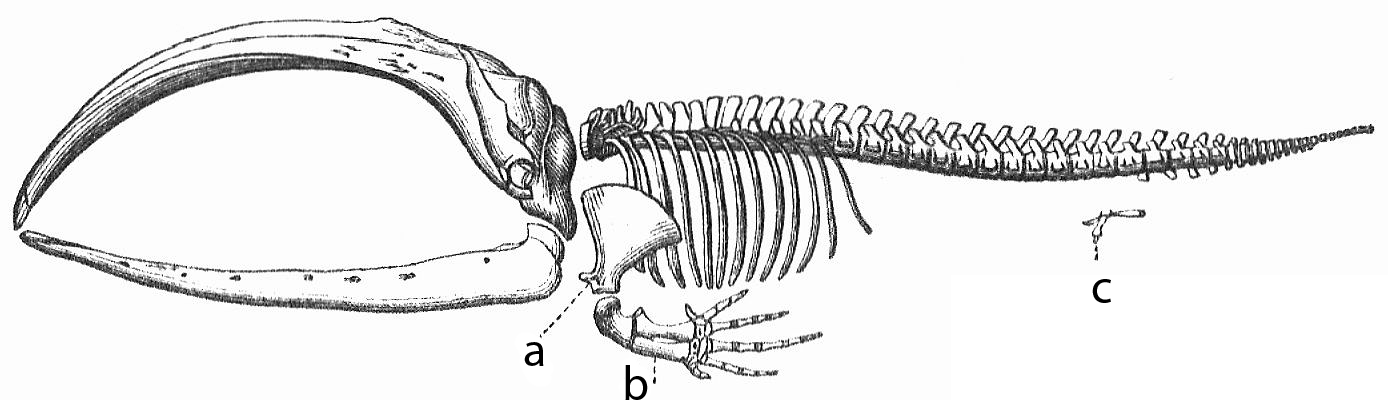
Whales that walked — the complete transitional series from wolf-like land mammal to fully aquatic giant. Feathered dinosaurs closing the bird-reptile gap. Ring species showing one species becoming two in real time. Bad designs that only evolution would produce, from the recurrent laryngeal nerve to the inverted retina.
Genetic Evidence
DNA nonsense — pseudogenes that have lost their function but are inherited from ancestors. Endogenous retroviruses that embed viral DNA into our genome, shared across species in nested hierarchies. The GULO pseudogene, broken in humans but functional in most mammals. Atavisms that occasionally reawaken long-dormant genetic pathways, revealing our evolutionary past.
Evolution · Paleontology
Walking Whales: A Prediction Confirmed
The most complete transitional sequence in the fossil record.
50 mya
🐺 Pakicetus
Land predator, wolf-sized, ears adapted for underwater hearing.
48 mya
🐊 Ambulocetus
"Walking whale" — crocodile-like, could walk on land and swim.
46 mya
🦴 Rodhocetus
More aquatic, paddle-like feet, pelvis still connected to spine.
40 mya
🐋 Basilosaurus
Fully aquatic, 18m long, tiny vestigial hind legs.
Today
🐳 Modern Whales
Flippers, no hind limbs, blowhole, sonar.

What It Proves: Every stage has been found with the right anatomy and in the right geological strata. No creationist explanation accounts for this sequence. Special creation predicts fixed kinds — evolution predicts gradual, functional transitions at every step.
Evolution · Paleontology
Feathered Dinosaurs: Birds Are Dinosaurs
The dinosaur-to-bird transition is now one of the best-documented in the fossil record.
Archaeopteryx (150 mya): Classic missing link — dinosaur skeleton with feathers and wishbone.
Microraptor (120 mya): Four-winged dinosaur that glided between trees.
Sinosauropteryx (124 mya): First dinosaur found with proto-feathers — simple filaments, not flight feathers.
Yutyrannus (125 mya): A 9-meter tyrannosaur covered in feathers. If T. rex had feathers, the image changes entirely.

Feathers Before Flight
Feathers first evolved for insulation and display, then were co-opted for flight. If they had been designed for flight, there would be no reason for proto-feathers — the precursors would be useless. Evolution predicts exactly this pattern of exaptation.
Evolution · Speciation
Ring Species: Evolution Caught in the Act
A living demonstration of how one species becomes two.
Ensatina salamanders in California form a ring around the Central Valley. At each step along the ring, neighboring populations can interbreed. The populations change gradually — slightly different colors, slightly different behaviors.
But at the southern end of the ring, where the two ends meet, the forms live together and never hybridize. They are reproductively isolated. A breeds with B, B with C, C with D — but D cannot breed with A.
The Implications
This is not a hypothetical. It is observable, testable, and happening today. Ring species show how continuous variation becomes discrete species when gene flow is interrupted. It bridges the gap between microevolution and macroevolution.
Evolution · Anatomy
Bad Design: The Signature of Evolution
An intelligent designer wouldn’t do any of this. Evolution explains every one.
🦒 Recurrent Laryngeal Nerve
Takes a 4.5-meter detour down the giraffe’s neck, around the aorta, and back up. In fish it takes a short, direct path. As necks lengthened in evolution, the nerve was trapped behind the aorta.

👁️ The Human Eye
Photoreceptors face backward, with nerves and blood vessels on top creating a blind spot. The octopus eye evolved independently and has the wiring behind the retina — the “correct” design.

🧬 The Vas Deferens
In male mammals, it loops over the ureter — a legacy of our fish ancestry when the testes were near the kidneys. An engineer would never route it this way.
The Argument from Poor Design: An engineer would not route a nerve around a major artery, wire a retina backwards, or loop a tube in a way that requires a hernia. These are historical constraints — the unmistakable signature of evolution tinkering with existing structures rather than designing from scratch.
Evolution · Genetics
The DNA That Makes No Sense
Broken genes, viral fossils, and genomic garbage.
Genomic Fossils
Our genome is littered with the wreckage of evolutionary history — broken genes, ancient viral insertions, and parasitic DNA. Each piece tells a story of common ancestry, not intelligent design. The following two slides cover the most powerful examples in detail.
Transposons
"Jumping genes" that replicate themselves within the genome. Most are decaying remnants — Alu elements alone make up ~10% of the human genome. Over 7,000 Alu insertions are shared between humans and chimps at identical positions. A designer who fills genomes with parasitic self-copying elements is either incompetent or not designing at all.
Evolution · Genetics
ERVs: The Viral Fingerprint
Endogenous retroviruses are the closest thing evolution has to a smoking gun.
What Are ERVs?
When a retrovirus infects a germ cell (sperm or egg), its DNA becomes a permanent part of the host genome. If that individual reproduces, the viral insertion is passed down to all descendants — a genetic fossil preserved for millions of years. About 8% of the human genome consists of ancient ERV remnants.
The Shared Insertion Problem
Humans and chimpanzees share hundreds of ERV insertions at the exact same genomic positions. The odds of two independent viral insertions landing in the same nucleotide position in two different species are effectively zero — far less than the probability of winning the lottery multiple times in a row. The only parsimonious explanation: common ancestry.
Evolution · Genetics
GULO: The Broken Gene That Betrays Our Ape Ancestry
A broken vitamin C gene — broken in exactly the same way in humans and apes.
How Vitamin C Works
Most mammals produce their own vitamin C via the GULO (L-gulonolactone oxidase) enzyme, coded by the GULO gene. Humans, apes, and guinea pigs cannot — we must get vitamin C from our diet. The GULO gene is broken in our genome: it has accumulated disabling mutations that prevent it from producing a functional enzyme.
The Identical Breakage
The GULO gene is broken in humans, chimpanzees, gorillas, and orangutans — and it's broken in the exact same way in all of them. The same deletions, the same frameshift mutations. An intelligent designer would have either made a working gene or broken it differently in each species. The only explanation for the identical breakage pattern is shared ancestry: we inherited the already-broken gene from a common ancestor.
Evolution · Genetics
Atavisms: The Genetic Echo
Dormant ancestral programs leaking through — only explained by shared ancestry.
Whales with hind legs: Several documented cases of whales born with external hind limbs — complete with femur, tibia, and foot bones. The genetic program for legs was never fully deleted, just suppressed.
Chickens with teeth: The talpid mutant activates the ancient reptilian dental pathway. Chickens haven't had teeth for 80 million years, but the genes are still there.
Human tails: Babies born with vestigial tails (caudal appendages). Surgical removal is routine. The embryonic tail program normally regresses; sometimes it doesn't.
Prediction vs Explanation
Evolution predicts atavisms: if we descended from ancestors with different body plans, the genetic machinery lingers. Special creation has no explanation — why would a designer program a whale genome to produce legs? Each atavism is a prediction confirmed.
Appendix
Messianic
Prophecies
The seven most-cited Old Testament messianic prophecies — examined in their original context.
Appendix · Overview
Why Each Prophecy Fails
Every one of the seven most-cited prophecies falls apart under scrutiny — taken out of context, mistranslated, or referring to contemporary figures.
Context & Original Meaning
The following appendix slides cover each prophecy in detail: the original Hebrew context, what the passage actually meant to its original audience, how the New Testament reinterpreted it, and why that reinterpretation is problematic. In every case, the prophecy either refers to a contemporary figure (Isaiah’s son, King Hezekiah, King Josiah) or is a poetic passage that was never intended as a prediction.
Vaticinium Ex Eventu
The New Testament authors used a technique called vaticinium ex eventu — reading earlier texts in light of later events. They searched the Septuagint (a Greek translation of the Hebrew Bible) for passages that could be reinterpreted as referring to Jesus, often ignoring the original meaning entirely. This was a standard literary technique of the time, not evidence of actual prediction.
Jesus · Prophecy #1
The “Virgin” Birth
Isaiah 7:14: “A virgin shall conceive and bear a son, and shall call his name Immanuel.”
The Context
Isaiah is speaking to King Ahaz of Judah, who is terrified of an invasion by Israel and Syria. The sign — a young woman (Hebrew: almah, meaning “young woman,” not bethulah, “virgin”) giving birth — is meant to show Ahaz that the threat will pass within a few years. The child is named Immanuel as a symbolic name, and the prophecy is fulfilled in Isaiah 8:3-4 when the prophet’s own son is born. The context is entirely about the 8th century BCE, not a messiah 700 years later.
Matthew (1:23) quotes the Septuagint, which mistranslated almah as parthenos (virgin). The original Hebrew says nothing about a miraculous birth.
Jesus · Prophecy #2
Born in Bethlehem
Micah 5:2: “But you, Bethlehem Ephrathah, though you are small among the clans of Judah, out of you will come for me one who will be ruler over Israel.”
The Context
Micah is speaking about a local ruler who will defend Israel from the Assyrian invasion. The prophecy continues in verses 5-6 about this ruler defeating Assyria. Jesus did not defeat Assyria. The prophecy is about a military leader in Micah’s own time, not a spiritual savior centuries later. When Matthew cites this for Jesus (Matthew 2:5-6), he reads a local political prophecy as a cosmic messianic prediction.
Micah’s prophecy was about a contemporary ruler who would defeat Assyria. Jesus was not that ruler. Additionally, the genealogies in Matthew and Luke contradict each other on Jesus’s lineage, making the Bethlehem claim suspect.
Jesus · Prophecy #3
Called Out of Egypt
Hosea 11:1: “Out of Egypt I called my son.”
The Context
Read the verse in full: “When Israel was a child, I loved him, and out of Egypt I called my son.” The “son” is the nation of Israel. The verse is referring to the Exodus — God calling the Israelites out of slavery in Egypt. It is a past event, not a future prediction. Matthew (2:15) pulls a single phrase out of context and claims it refers to Jesus returning from Egypt as a child.
This is the textbook definition of prooftexting — taking a verse out of its original context and giving it a new meaning. The original text is about the nation of Israel in the past, not a person centuries in the future.
Jesus · Prophecy #4
Rachel Weeping for Her Children
Jeremiah 31:15: “A voice is heard in Ramah, lamentation and bitter weeping. Rachel is weeping for her children.”
The Context
Jeremiah is describing the Babylonian exile of the northern tribes (Ephraim). Rachel, the matriarch buried near Ramah, is poetically depicted as weeping for her descendants being led into captivity. The very next verse (Jeremiah 31:16) says: “Keep your voice from weeping… they shall come back from the land of the enemy.” It is about exile and return, not about babies being killed in Bethlehem.
Matthew (2:17-18) applies these words to Herod’s massacre of infants, an event recorded in no other historical source. The original text is about the exile of the northern kingdom, not a massacre in Bethlehem 600 years later.
Jesus · Prophecy #5
The Suffering Servant — Isaiah 53
The most-cited “messianic prophecy” in the New Testament. But who is the servant?
Jewish Interpretation
Jewish scholars have always read the servant in Isaiah 52-53 as the nation of Israel. The servant is “despised and rejected by men” because Israel was conquered and scattered. The servant “bore our griefs” because Israel suffered among the nations. Read Isaiah 49:3: “You are my servant, Israel, in whom I will be glorified.” The servant is explicitly identified as Israel in the very same set of poems. In Isaiah 42 and 49, sometimes the servant is a faithful remnant of Israel, sometimes the whole nation. There is no single individual.
The New Testament reads the servant as an individual (Jesus). The Old Testament context identifies the servant as Israel. When you read the entire passage (Isaiah 52:13-53:12), the servant suffers because of Israel’s sins, not to atone for the world’s sins.
Jesus · Prophecy #6
Psalm 22 — Crucifixion Details
“My God, my God, why have you forsaken me?” — Jesus’s cry from the cross.
The Psalmist’s Context
Psalm 22 is attributed to David and describes — in typical Hebrew poetic hyperbole — his own distress when facing enemies. Verses like “they pierced my hands and my feet” (v. 16) are a contested translation: the Masoretic text reads “like a lion at my hands and feet” (ka’ari yadai viraglai), not “pierced.” The Septuagint introduced “pierced.” The psalm ends with David praising God for deliverance. It is a song of thanksgiving for rescue, not a prediction of crucifixion.
Casting lots for garments (Psalm 22:18) was standard Roman practice for crucifying multiple people simultaneously — it was done to all condemned men, not uniquely to Jesus. Gospel authors retrofitted details of Jesus’s crucifixion to match Psalm 22’s poetic imagery.
Jesus · Prophecy #7
Not Abandoned to the Grave
Psalm 16:10: “You will not abandon my soul to Sheol, nor let your Holy One see corruption.”
The Context
David is expressing confidence that God will protect him from dying at the hands of his enemies. The psalm is about David’s hope for deliverance in this life. Peter (Acts 2:25-31) and Paul (Acts 13:35-37) argue that since David did die and his tomb was still around, the psalm must refer to someone else — Jesus. But David is speaking in the first person. He is the “Holy One” who trusts God not to let enemies kill him prematurely.
Peter and Paul argue: “David died, so he can’t be talking about himself.” But this only works if you ignore that the psalmist often speaks hyperbolically. Every psalm of lament expresses hope that God won’t let the speaker die. If none of those psalmists were predicting the resurrection, why should this one be treated differently?